
From Big Screen to XR Headsets: How Digital Storytelling is Evolving in Honolulu
Author: XploreRide Editorial Team
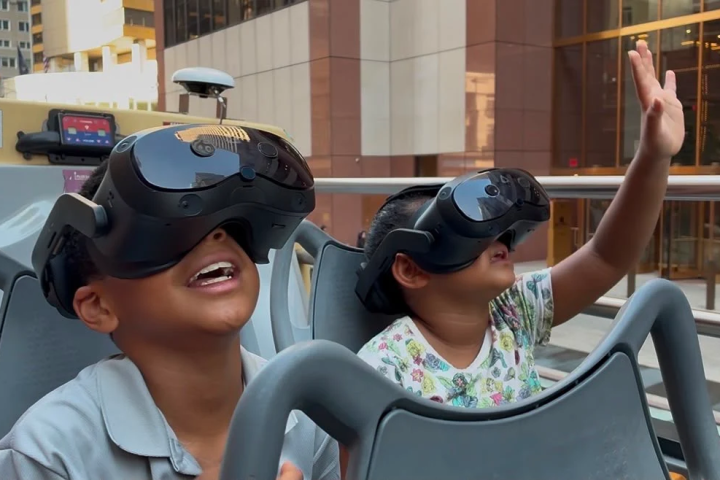
Honolulu has long used stories to share its landscapes and culture with visitors. For decades those stories reached audiences through guidebooks, recorded audio on open-air trolleys, museum exhibits, and films that presented Hawaii from a distance. Each format added information and atmosphere, yet kept the audience outside the scene. The physical journey through the city remained separate from the narrative.
XploreRide changes that relationship. Guests board a zero-emission electric bus in central Waikiki, put on custom VR headsets, and experience Hawaiian legends layered directly onto the live view of Waikiki Beach, Kapiolani Park, and Diamond Head. The technology, creative production, and cultural guidance turn a short continuous loop into a location-synced story that unfolds in real time. The experience lasts approximately 30 minutes and returns riders to the same central departure point, ready for the next part of their day.
The Earlier Stages of Digital Storytelling in Honolulu
Before immersive systems arrived, storytelling in Honolulu followed a clear progression. Early visitor experiences relied on printed materials and live guides who pointed out landmarks and shared oral histories. Museums such as Bishop Museum presented artifacts alongside explanatory text panels and occasional short films. These approaches preserved accuracy and cultural context but required visitors to stand still or move at a deliberate pace.
Audio narration on trolleys and buses added mobility. Riders heard recorded or live commentary timed to the route. The content remained external to the view. A passenger looked out the window while the story played through speakers. Films and television brought Hawaiian scenery and legends to wider audiences yet placed the viewer in a fixed seat far from the actual locations. Later digital tools introduced mobile apps and touch-screen kiosks that offered additional facts or maps. These tools improved access to information without altering the fundamental separation between the physical place and the story about that place.
Each stage solved a practical problem. Guidebooks and museums delivered depth. Audio tours added convenience. Screens expanded reach. None of them allowed a visitor to move through the city while the narrative responded to the exact location and motion of the vehicle. The story stayed adjacent to the experience rather than integrated with it.
How VR Changes the Relationship Between Story and Place
Extended Reality combines elements of virtual reality and augmented reality into a single system that operates while the passenger travels. On the XploreRide Hawaii Underwater Adventure the RideVision platform, developed by a University of Tokyo-linked technology group, synchronizes digital content with two data streams at once: the bus’s speed, direction, and position, and the passenger’s head movements. When the vehicle turns or slows, the digital layers respond without lag. Real landmarks remain visible through the windows while ocean environments, volcanic sequences, and cultural figures appear in precise alignment with the scenery outside.
Creative direction for the production comes from NAKED, INC. The studio designs the visual sequences, pacing, and overall cinematic quality. Cultural supervision ensures the narratives respect Hawaiian traditions and oral histories. Guests encounter an Aumakua figure who serves as guide. They collect Mana Stones that unlock additional layers of information and story. The interaction is simple and direct: the digital environment responds to the rider’s presence and to the actual path of the bus.
This combination produces a continuous narrative arc rather than a series of disconnected stops. The bus never requires passengers to disembark mid-route. The enclosed, climate-controlled cabin operates in any weather and produces zero tailpipe emissions. English and Japanese narration options make the same story accessible to a wide range of visitors. The departure and return point remains the former DFS location on Royal Hawaiian Avenue, keeping logistics simple for anyone staying in Waikiki.
Key Differences in Storytelling Approach
The table below summarizes the shift from earlier formats to the current VR method:
| Aspect | Traditional Tours / Film / Screens | XploreRide VR Experience |
|---|---|---|
| Audience role | Observer | Participant inside the story |
| Connection to place | Separate from or layered after the visit | Real-time overlay on actual landmarks |
| Interactivity | Limited or none | Mana Stone collection and responsive digital layers |
| Motion integration | None or basic narration | Sensor-synced with vehicle and head movement |
| Cultural delivery | Recorded audio or text | Guided by Aumakua figure with cultural oversight |
| Environment | Open or indoor, weather-dependent | Climate-controlled zero-emission bus |
The differences are practical. Earlier methods required visitors either to remain stationary or to accept a fixed audio track that could not adapt to traffic or timing. VR keeps the physical journey short and central while expanding the amount of visual and cultural content that can be delivered without extending the time on the road.
What Guests Experience on the Route
The route covers approximately 10.3 km and forms a continuous loop through the core of Waikiki and past Diamond Head. As the bus travels along the coast, digital marine life and coral structures appear in the headset view while the real shoreline remains visible. Near Diamond Head the system presents sequences that illustrate volcanic formation and the geological history of the area. Cultural elements, including stories shaped under the guidance of local practitioners, run throughout the ride.
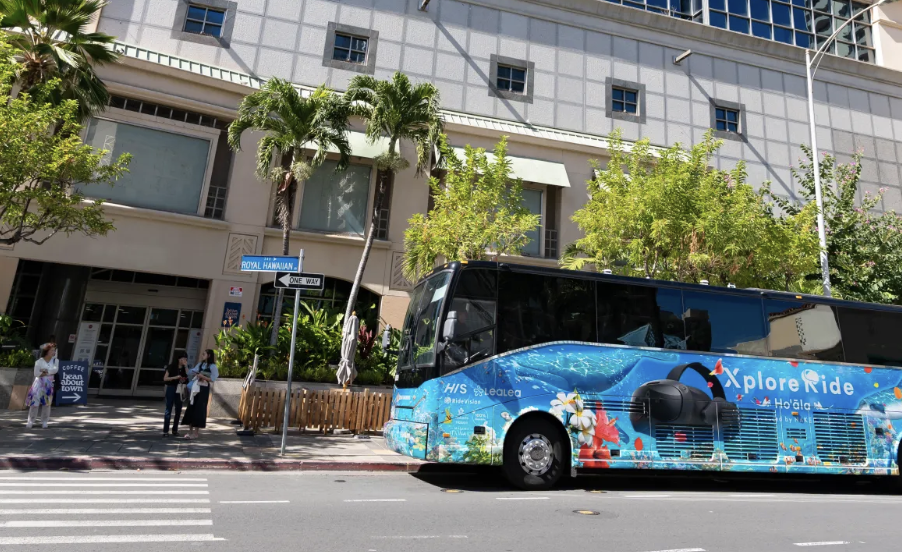
The Aumakua guide provides orientation and context. Mana Stones appear at key moments; collecting them reveals additional details about the environment or the legends tied to specific places. Because the digital content stays synchronized with the vehicle’s motion, the sense of movement matches what the body feels. Most riders report little or no motion discomfort. The cabin temperature remains steady, and the zero-emission electric bus keeps the experience quiet enough for the narration and ambient sound to remain clear.
The entire sequence is designed as a single narrative arc. There are no intermediate stops that interrupt the flow. Riders stay seated from departure to return. The short total duration leaves time for other activities the same day. Families with children age 7 and older, first-time visitors, and returning travelers all encounter the same production. For complete itinerary details and current scheduling, see the Hawaii Underwater Adventure page. Further description of the tourist experience appears on the Unique Things to Do in Waikiki page. Additional background on the narrative structure is available in the Hidden Underwater City exploration post.
Why This Format Matters for Visitors and Local Storytelling
VR storytelling keeps cultural content tied to the places it describes. Guests leave with a stronger sense of connection because the narrative unfolds in motion and in direct visual relationship to the landmarks. The short duration fits easily between beach time, meals, or shopping. No special physical ability is required beyond the ability to sit for the length of the ride and wear a headset.
The collaboration between the operator, the creative studio, and the technology provider shows how digital tools can support rather than replace traditional knowledge. Cultural consultants shape the content so that digital layers remain accurate and respectful. The production does not invent new stories; it presents existing ones in a format that matches the way many visitors now expect to engage with information: visually rich, interactive, and time-efficient.
For educators and group leaders the same system offers a contained environment that can support discussions of marine ecosystems, volcanic geology, and cultural values without the logistical demands of longer outdoor excursions. For independent travelers it supplies a focused interval of immersion that stands apart from both conventional bus tours and static screen experiences.
Guest Reviews
⭐️⭐️⭐️⭐️⭐️
“Amazing experience. So much fun for both kids and adults! We all loved it and will definitely do it again when we are back to Hawaii. The pick up location is easy to find and was a 10 minute walk from our hotel. It was an exciting ride! Highly recommend!”
⭐️⭐️⭐️⭐️⭐️
“It was an amazing experience and love to do it again. If you’re looking for something fun to do with the family or do something when it is raining, this is the one thing the whole family can do and enjoy. If you get a chance while visiting the island, I highly recommend this and it’s something you’ll never forget.”
⭐️⭐️⭐️⭐️⭐️
“Absolute must do in Waikiki. Informative yet fun. It was the best 30 minutes of doing anything in Waikiki that I have done.”
Experience the Next Chapter of Honolulu Storytelling
Digital storytelling in Honolulu no longer stops at the screen or the recorded track. On XploreRide the story moves with the bus and responds to the city itself. Guests become part of the narrative for a focused interval and return to the real Waikiki with a clearer view of its layered history and environment.
Reserve seats for the Hawaii Underwater Adventure through the official booking page. Group options and further details are available on the main site. Choose a convenient time and step into the form of place-based storytelling that is already operating in the heart of Waikiki.