
How Immersive XR Buses Are Revolutionizing History & Marine Biology Field Trips
Author: XploreRide Editorial Team
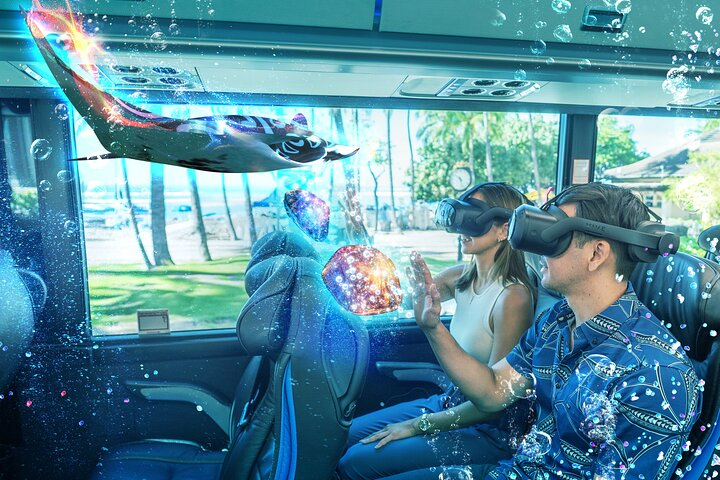
Traditional field trips in Honolulu often struggle to hold student attention. Long bus rides, weather challenges, and passive observation can leave educators searching for stronger ways to connect classroom lessons with real places. XploreRide addresses this gap with an Virtual Reality (VR) bus experience designed specifically for Hawaii’s unique environment.
Students board a zero-emission electric bus in Waikiki and wear custom VR headsets. As the vehicle travels a 10.3 km loop past Waikiki Beach, Kapiolani Park, and Diamond Head, digital overlays merge with the actual scenery. Guided by an Aumakua figure, participants explore coral reefs, volcanic formation, and Hawaiian cultural narratives while collecting Mana Stones. The result is a contained, high-engagement session that supports marine biology, Hawaiian history, geology, and STEM concepts.
Why Traditional Field Trips Fall Short for Modern Learners
Many Hawaii educators report that standard outdoor or museum visits compete with digital distractions. Students may disconnect when content remains abstract or when logistics dominate the day. Heat, limited mobility access, and fixed schedules add further barriers.
XploreRide solves several of these issues at once. The bus is fully air-conditioned and contained. The experience lasts approximately 30 minutes of core immersion, fitting cleanly into a school schedule. Staff handle headset fitting and supervision. Teachers and chaperones ride with the group, maintaining a recommended 1:10 ratio.
The content itself is interactive. Students actively collect Mana Stones and observe synchronized digital layers rather than simply listening to narration. This format aligns with how digital-native learners process information.
Curriculum Alignment: Marine Biology, History, and STEM
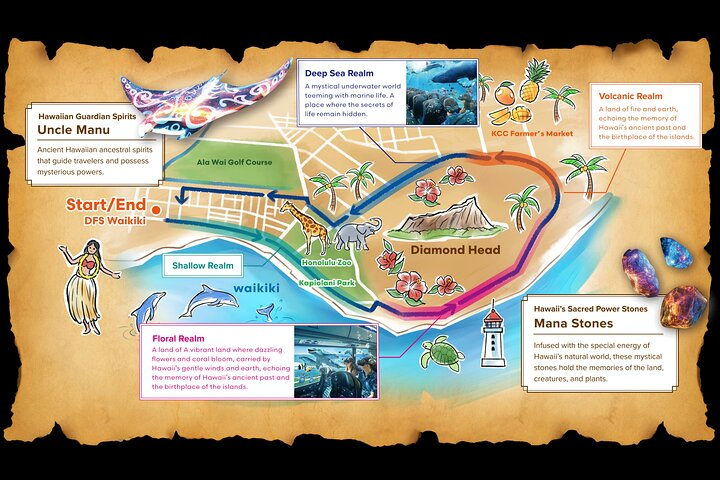
XploreRide content maps to core subjects taught in Hawaii schools. Educators can align the ride with Next Generation Science Standards and local Hawaiian studies requirements.
Marine Science and Conservation
As the bus passes Waikiki Beach, VR overlays reveal coral ecosystems and endemic marine life. Students see visual representations of reef structures, fish species, and environmental pressures such as bleaching. Narration introduces the concept of mālama (stewardship) and links to real conservation work, including partnerships that support the Waikīkī Aquarium.
This section functions as a “dry snorkeling” experience. Students observe biodiversity without water, sand, or weather constraints. It pairs well with classroom units on ecosystems or ocean literacy programs offered by institutions such as the Hawaiʻi Institute of Marine Biology.
Hawaiian History and Culture
Cultural content is supervised by Kumu Hula Blaine Kia. Students encounter stories of ancestral guardians, including figures such as Uncle Manu, and learn the spiritual meaning of mana. The digital environment presents these narratives alongside the physical landscape so that legend and place remain connected.
At Diamond Head (Leʻahi), the VR system visualizes volcanic origins. Students watch representations of magma activity and crater formation while the real landmark remains in view. This turns a standard geography stop into a visual history lesson on the Honolulu Volcanics series.
Technology and Engineering (STEM)
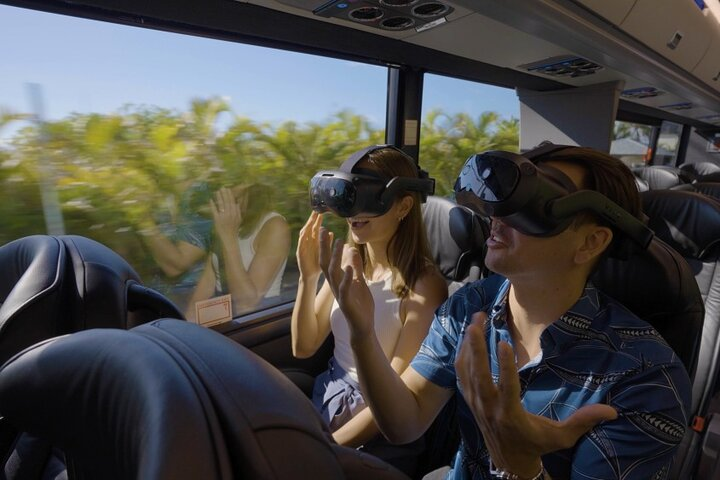
The RideVision system itself becomes part of the lesson. Developed by Synesthesias Inc., a University of Tokyo-linked venture focused on autonomous vehicle technologies, the platform fuses GPS, accelerometer, and gyroscope data in real time. Students can observe how sensor fusion keeps digital content synchronized with the bus’s motion, reducing motion discomfort and demonstrating practical applications of physics and computer science.
Teachers of robotics or coding classes gain a concrete example of latency management and real-world data integration operating at vehicle speeds.
Practical Advantages for School Groups
The following comparison highlights operational differences between XploreRide and common field trip formats in Honolulu:
| Feature | XploreRide XR Bus | Traditional Hiking or Outdoor Trip | Museum Visit |
|---|---|---|---|
| Safety & Environment | Contained, air-conditioned, zero-emission | Weather and terrain risks | Indoor, controlled |
| Engagement Level | VR interaction and Mana Stones | Variable, depends on student fitness | Often passive observation |
| Accessibility | Inclusive for most mobility levels | Challenging for some students | Generally accessible |
| Duration | 30 minutes core experience | Often multi-hour | Flexible but static |
| Curriculum Integration | Marine biology, culture, geology, STEM | Nature-focused or limited | Subject-specific |
| Logistics | Single booking, central Waikiki departure | Permits, transport, weather checks | Ticket coordination |
Capacity reaches 20 students and chaperones per bus. Departure is from the former DFS / T Galleria location on Royal Hawaiian Avenue. English and Japanese language options support diverse classrooms. The zero-emission bus also supplies a built-in sustainability discussion: measurable carbon reduction examples from operations can be referenced in environmental science units.
Group booking support includes curriculum alignment assistance. Educators can request rates tailored to school budgets and schedule pre-trip materials.
For detailed planning steps, see the Ultimate Guide to Planning a School Field Trip to XploreRide. Additional information on student experiences appears on the STEM & Culture Field Trips page. Full Hawaii tour details, including itinerary and meeting point, are available on the Hawaii Underwater Adventure page.
How Educators Prepare and Follow Up
Successful groups typically complete three steps:
- Match the ride zones (Deep Sea, Volcano, and related cultural segments) to specific learning objectives before booking.
- Share a short pre-trip overview so students understand headset use and expectations (no food or drink on the bus, full attention during the guided portion).
- Conduct a brief debrief after the ride. Discussion prompts can cover observed marine species, volcanic processes, cultural values, or the technology that made the overlays possible.
The short duration leaves time for lunch or additional classroom activities the same day. The central location near Royal Hawaiian Center and Kapiolani Park simplifies logistics.
Frequently Asked Questions
What age group is appropriate for XploreRide school field trips?
How long does the educational experience last?
Does the content support specific Hawaii curriculum standards?
Is the bus suitable for students with motion sensitivity?
How do schools book a group and what is the capacity?
Can the experience be used for both science and social studies classes?
Bring the Classroom of the Future to Your Students
XploreRide offers Hawaii educators a practical, high-engagement alternative to conventional field trips. Students leave with direct visual and interactive experience of coral ecosystems, volcanic land formation, cultural narratives, and real-world technology applications—all within a safe, time-efficient format.
To schedule a group or discuss curriculum alignment, visit the school field trips inquiry page or the main Hawaii Underwater Adventure booking section. Contact the group sales team for availability and school-specific packages.
Give your students a field trip they will remember and one that reinforces the subjects you teach every day.