
Walking Tours vs. The VR Bus: What is the Best Way to Learn Hawaiian History?
Author: XploreRide Editorial Team
Hawaii’s history is extraordinary. From the formation of the islands through volcanic force to the rise of the Hawaiian Kingdom and the overthrow of Queen Liliʻuokalani, the stories of this place are layered, powerful, and still very much alive. Most visitors who want to understand that history sign up for a historic walking tour of downtown Honolulu or the Capitol District.
There is one problem: Honolulu is hot. Walking long stretches of concrete and asphalt in high humidity while trying to hear a guide over traffic noise often turns an educational outing into an endurance test. By the thirty-minute mark, many people are more focused on shade and water than on the monarchy or the moʻolelo.
In 2026 there is a clearly different option. XploreRide offers a climate-controlled VR bus experience—an immersive storytelling journey that covers the same history and more without a single step in the sun. The question is no longer simply “walking tour or something else.” It is whether the classic sidewalk experience still makes sense when modern VR history tours and specialized bus tours can deliver richer visuals, greater comfort, and broader geographic context in less time.
This guide compares the two approaches honestly so you can decide which method of learning Hawaiian history fits your group, your physical needs, and your travel style.
1. Comfort and the “Sweat” Factor
Traditional walking tours keep you outdoors for the entire duration. The Capitol District and surrounding historic areas offer limited shade. Pavement radiates heat, humidity sits high, and bus and car traffic create constant background noise. After half an hour many guests report that physical discomfort begins to compete with the content of the tour.
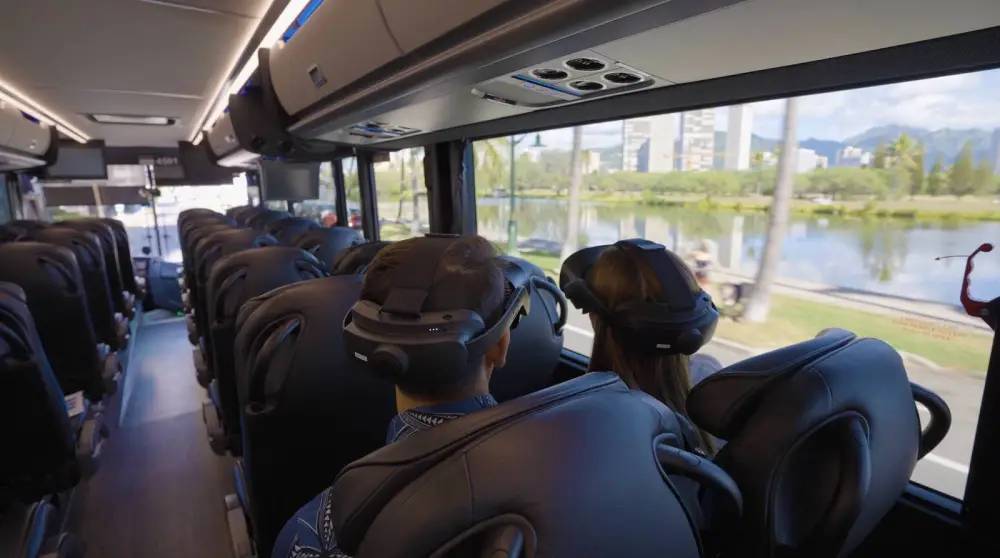
XploreRide’s VR bus is a climate-controlled environment held at approximately 68°F. Guests sit in padded seats for the full experience. There is no walking, no standing in the sun, and no fighting traffic noise. The result is simple: your attention stays on the story rather than on finding the next water fountain. For anyone sensitive to heat, humidity, or prolonged outdoor exposure, this difference alone is decisive.
2. Visual Experience: Imagination Versus Immersion
On a walking tour the guide typically points to a modern structure and asks you to picture what once stood there—a fishpond, a royal residence, or open landscape. You do the mental work while modern buildings, traffic, and commercial signage remain fully visible.
XploreRide takes a different approach. Guests wear XR headsets. Through proprietary RideVision technology, the modern streetscape is replaced with reconstructed historical and geological scenes synchronized to the movement of the bus. You can witness volcanic formation of the islands, see landscapes as they appeared in earlier eras, and experience visual storytelling that traditional walking tours cannot deliver. The experience is closer to a cinematic, location-aware film than to a guided lecture. For travelers who learn best by seeing rather than imagining, VR history tours of this kind provide a clear advantage.
3. Geographic Range and the “Big Picture”
A walking tour is limited by human pace and stamina. Most historic walking tours in Honolulu stay within a tight radius—often just a few blocks around Iolani Palace and the King Kamehameha statue. You gain detail in a small area but miss the larger spatial relationships that define the city and the island.
Because XploreRide is a moving bus tour, the route covers significantly more ground. The approximately 10.3 km loop travels from Waikiki, past Diamond Head (Leʻahi), along the Ala Wai Canal, and through key sightlines that place individual historic sites in their geographic and cultural context. Guests leave with a clearer sense of how the landscape, the ocean, and the built environment connect. This broader perspective is difficult to achieve on foot in the same amount of time.
4. Accessibility and Who Can Participate
Walking tours, even those labeled “accessible,” usually involve uneven sidewalks, curbs, standing periods, and distance. They can be challenging or impossible for seniors, young children, people with knee or back issues, or anyone with limited mobility.
The VR bus equalizes the experience. Boarding is straightforward, seating is fixed, and no walking is required once the tour begins. Guests from age 8 to 80, and those with mobility limitations, receive the same high-quality presentation. For multi-generational families or groups that include older travelers, this accessibility is often the deciding factor.
5. Storytelling Style: Lecture Versus Cinematic Narrative
Walking tours tend to function like outdoor lectures. Guides deliver dates, names, architectural notes, and political history. The format works well for visitors who enjoy detailed verbal information and the ability to ask questions in real time.
XploreRide packages the same historical material as a cinematic experience. Professional voice acting (led by the character Uncle Manu), an original score, high-fidelity sound design, and synchronized visual effects turn the narrative into something closer to a short film that the bus itself participates in. Guests do not merely hear when the islands formed; they see and feel the sequence through immersion. The result is memorable for casual travelers and families who may find pure lecture formats dry.
Side-by-Side Comparison
| Factor | Historic Walking Tour | XploreRide VR Bus Tour |
|---|---|---|
| Physical demand | High — walking, standing, heat exposure | Low — seated, climate-controlled |
| Visual approach | Imagination + modern surroundings | Immersive XR reconstruction |
| Geographic coverage | 3–4 block radius | ~10.3 km loop including Waikiki & Diamond Head |
| Best for mobility | Limited | Excellent for all ages and abilities |
| Storytelling style | Lecture / Q&A | Cinematic narrative with score & effects |
| Typical duration | 60–90 minutes | 25 minutes of focused content |
| Heat exposure | Full outdoor | None |
| Ideal group | Academics, detail-oriented adults | Families, seniors, heat-sensitive travelers |
What Our Clients Say
Travelers who have experienced both formats often highlight the practical differences.
⭐⭐⭐⭐⭐
“It was an amazing experience and love to do it again. If you’re looking for something fun to do with the family or do something when it is raining, this is the one thing the whole family can do and enjoy. If you get a chance while visiting the island, I highly recommend this and it’s something you’ll never forget.” — James M. (TripAdvisor)
⭐⭐⭐⭐⭐
“Absolute must do in Waikiki. Informative yet fun. It was the best 30 minutes of doing anything in Waikiki that I have done.” — frozentravler (TripAdvisor)
⭐⭐⭐⭐⭐
“Awesome excursion. Very imaginative. Would definitely recommend it.” — Maria O. (TripAdvisor)
These comments reflect a consistent pattern: comfort and visual immersion remove barriers that traditionally limit who can fully engage with Hawaiian history while on vacation.
Frequently Asked Questions
- Is the history presented on the XploreRide VR bus accurate?
Yes. Content was developed with input from Hawaiian cultural practitioners to maintain accuracy and cultural respect. The tour covers the formation of the islands, key events of the Kingdom era, and related legends, presented through modern immersive technology rather than traditional oral or lecture formats. - Can I take photos during the experience?
During VR segments the headset is worn, so photography is not possible. Between segments the bus has large windows and the route includes strong scenic views. Guests are encouraged to photograph those moments before and after the immersive portions. - How long is each type of tour?
Walking tours commonly run 60–90 minutes because of walking pace and stops. The XploreRide experience is tightly edited to approximately 25 minutes of continuous content. - Is the VR bus suitable for children?
Yes, for ages 7 and up. Interactive visual elements and the “game-like” quality of certain sequences keep younger guests engaged in ways that long periods of standing and listening often do not. - What about motion sensitivity?
The ride itself is smooth. Guests who are highly sensitive to VR or vehicle motion can bring motion-sickness bands as a precaution. Most participants report no issues. - How do these VR history tours and bus tours compare in value?
Walking tours often cost less per person but deliver a narrower geographic and visual experience under outdoor conditions. The VR bus packages a wider route, controlled environment, and high-production storytelling into a shorter, more accessible package. For many groups the time saved and the reduction in physical stress outweigh the difference in ticket price. - Can the bus tour replace a visit to specific historic sites?
It complements rather than replaces them. Guests who want to enter buildings or examine architectural details closely should still plan site visits. Those who want the overarching narrative, landscape context, and visual reconstruction find the bus tour more efficient and more comfortable.
Practical Tips for Each Option
If you choose a walking tour:
Bring at least one liter of water per person. Wear a hat and SPF 50; shade is limited near the King Kamehameha statue and surrounding areas. Choose closed, comfortable shoes—flip-flops become uncomfortable on hot, uneven pavement.
If you choose the XploreRide VR bus:
Bring a light layer; the air conditioning is strong. Optional motion-sickness bands can provide peace of mind. Keep a phone or camera ready for the non-VR scenic segments.
Who Should Choose Which Format?
- Hardcore academics who want to ask detailed questions and examine buildings up close often prefer walking tours.
- Families with children, seniors, mobility-limited travelers, and anyone who dislikes heat consistently rate the VR bus higher.
- Travelers short on time who still want a coherent overview of Hawaiian history and geography also favor the moving, immersive format.
The Verdict for 2026
A classic historic walking tour remains valuable if your priority is tactile contact with specific buildings and the ability to interrupt a guide with questions. For everyone else—especially multi-generational groups, heat-sensitive visitors, and those who learn better through visuals—the combination of climate control, expanded geographic range, and synchronized XR storytelling makes modern VR history tours and specialized bus tours the more effective and more enjoyable way to engage with Hawaiian history.
XploreRide’s approach removes the physical barriers that have long limited how many people can fully absorb these stories while on vacation. In a destination known for both cultural depth and tropical heat, that difference is significant.
Ready to experience Hawaiian history without the heat and the long walk? Book the XploreRide VR bus tour and see the landscape and the legends as they come to life.